
The Shetland Islands: Where They Are and How to Visit
Shetland is about as far north as you can go in Britain: a group of around 100 islands where the North Sea meets the Atlantic, closer to Norway than to Edinburgh. It has Viking roots, sea cliffs full of puffins, otters on the shore and summer nights that never quite get dark. Here’s where it is, how to get there, and what to see when you arrive.
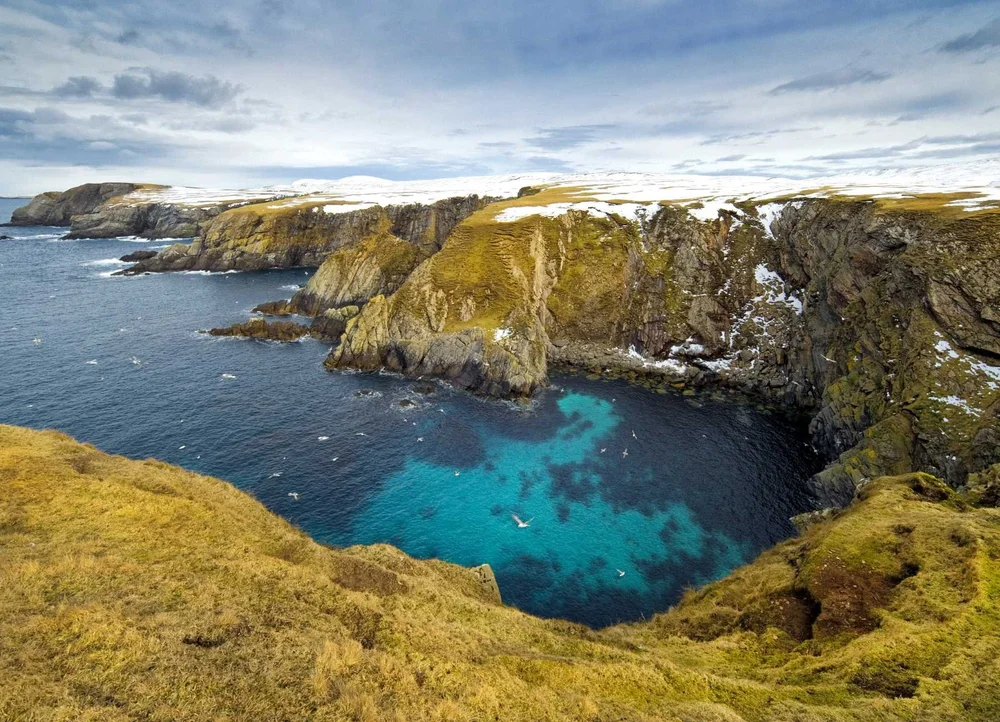
- Where are they? About 110 miles (170 km) north-east of mainland Scotland and 50 miles (80 km) beyond Orkney. They’re the most northerly part of the UK.
- How do you get there? By overnight ferry from Aberdeen to Lerwick (about 12 hours), or by plane to Sumburgh Airport.
- What’s special about them? Norse history, huge seabird cliffs, Iron Age brochs, Shetland ponies and the Up Helly Aa fire festival.
- Do our tours go there? Not our scheduled tours. We visit Orkney, Shetland’s nearest neighbour, and we can include Shetland in a private trip.
- IslandsAbout 10016 of them inhabited
- PopulationAbout 23,000Around a third live in and near Lerwick
- Main townLerwickOn the island called Mainland
- Part of Scotland since1469Before that, ruled by Norway
- Up Helly AaLast Tuesday of JanuaryLerwick’s Viking fire festival
- Nearest ESW toursOrkneyFrom £428 pp, 5 days from Edinburgh
Where are the Shetland Islands?
The Shetland Islands lie in the North Sea, about 110 miles (170 km) north-east of the Scottish mainland and 50 miles (80 km) north-east of Orkney. On many maps of Britain they’re tucked into a box in a corner, which gives the wrong idea: in reality they’re a long way north. Lerwick, the main town, is on the same latitude as southern Greenland and is closer to Bergen in Norway than it is to Edinburgh.
There are around 100 islands, and 16 are lived on. The biggest, confusingly, is called Mainland. Lerwick and Sumburgh Airport are both on Mainland, and the islands of Yell and Unst stretch north from it to the very top of Britain. Nowhere in Shetland is more than about three miles (5 km) from the sea.
Shetland is part of Scotland and the UK, with its own local council. About 23,000 people live here, working in fishing, salmon farming, oil and gas, and tourism.
How to get to Shetland
By ferry
NorthLink Ferries sails overnight from Aberdeen to Lerwick every day of the week, all year round. The direct crossing takes about 12 hours, and some sailings call at Kirkwall in Orkney on the way, which takes 14 to 15 hours. You can book a cabin, a sleeping pod or a reclining seat, and bring a car. Cabins sell out in summer, so book early.
The ferry via Kirkwall also means you can combine Orkney and Shetland in one trip.
By plane
Loganair flies to Sumburgh Airport, at the southern tip of Mainland, from several Scottish airports, including Aberdeen, Edinburgh and Glasgow. The flight from Aberdeen takes about an hour. Sumburgh is about 25 miles (40 km) from Lerwick.
Getting around
A car gives you the most freedom. Roads are quiet and good, and inter-island ferries run to Yell, Unst, Bressay and other islands, the busiest routes many times a day. There are buses on Mainland, but services to remote spots can be infrequent.
Give Shetland at least three or four full days once you’ve arrived. The islands are bigger than they look, the weather can change your plans, and the best moments (an otter on the shore, the light on a summer night) don’t come on a schedule.
Shetland’s Norse history
Shetland was settled by Norse Vikings in the 800s and was ruled from Norway, and later Denmark–Norway, for about 600 years. In 1469, King Christian I pledged the islands to Scotland as security for his daughter’s dowry when she married James III. The dowry was never paid, and in 1472 the Scottish Parliament annexed the islands.
You still hear and see the Norse past everywhere. Most place names are Norse, the local dialect has hundreds of words from Norn, the old Norse language of the islands, and the flag is a white Nordic cross on blue. Many Shetlanders will tell you they feel as close to Norway as to Edinburgh.
Up Helly Aa
The biggest celebration of that heritage is Up Helly Aa in Lerwick, held on the last Tuesday of January. A squad of costumed "Vikings" led by the Guizer Jarl marches through the town with hundreds of blazing torches, then throws them into a full-size replica Viking longship and burns it. The party goes on all night. Smaller fire festivals are held around Shetland in February and March.
The best places to visit in Shetland
1Jarlshof
Near Sumburgh, Jarlshof is one of the most remarkable archaeological sites in Britain. People lived here for more than 4,000 years, and you can walk through Bronze Age houses, an Iron Age broch and wheelhouses, a Viking longhouse settlement and a 16th-century laird’s house, all on one small headland.
2Mousa Broch
On the small island of Mousa, reached by boat in summer, stands the best-preserved Iron Age broch in the world: a round drystone tower about 13 metres (43 feet) tall, built around 2,000 years ago. On summer nights, storm petrels flutter in to nest in its walls, and boat trips run to see them.
3Sumburgh Head
The cliffs below Sumburgh Head lighthouse are one of the easiest places in Britain to see puffins up close, roughly from May to early August. The lighthouse has a visitor centre, and whales and dolphins are sometimes seen offshore.
4Eshaness
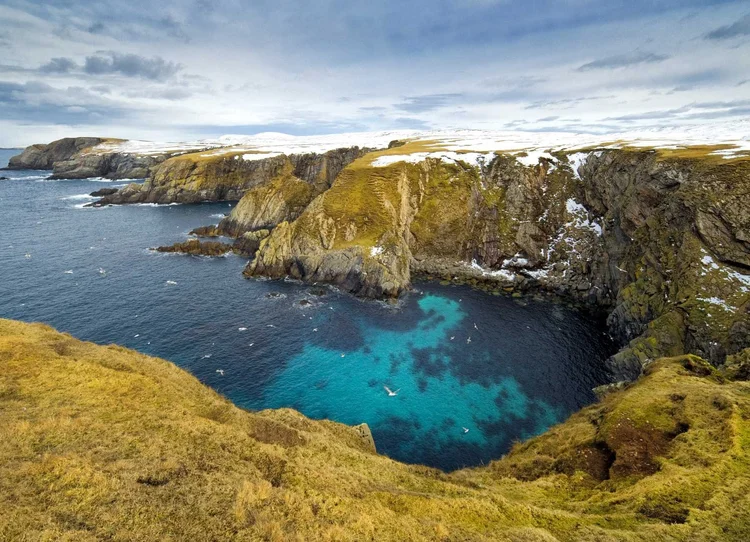
On the north-west coast, the cliffs at Eshaness are the eroded side of an ancient volcano. In a winter storm the Atlantic throws spray right over them. There’s a lighthouse, a clifftop walk and a huge collapsed sea cave called the Holes of Scraada.
5St Ninian’s Isle
A curving bar of white sand, called a tombolo, links St Ninian’s Isle to Mainland, with sea on both sides. It’s one of the finest in Britain. A hoard of Pictish silver was found in the island’s old chapel in 1958.
6Lerwick and Scalloway
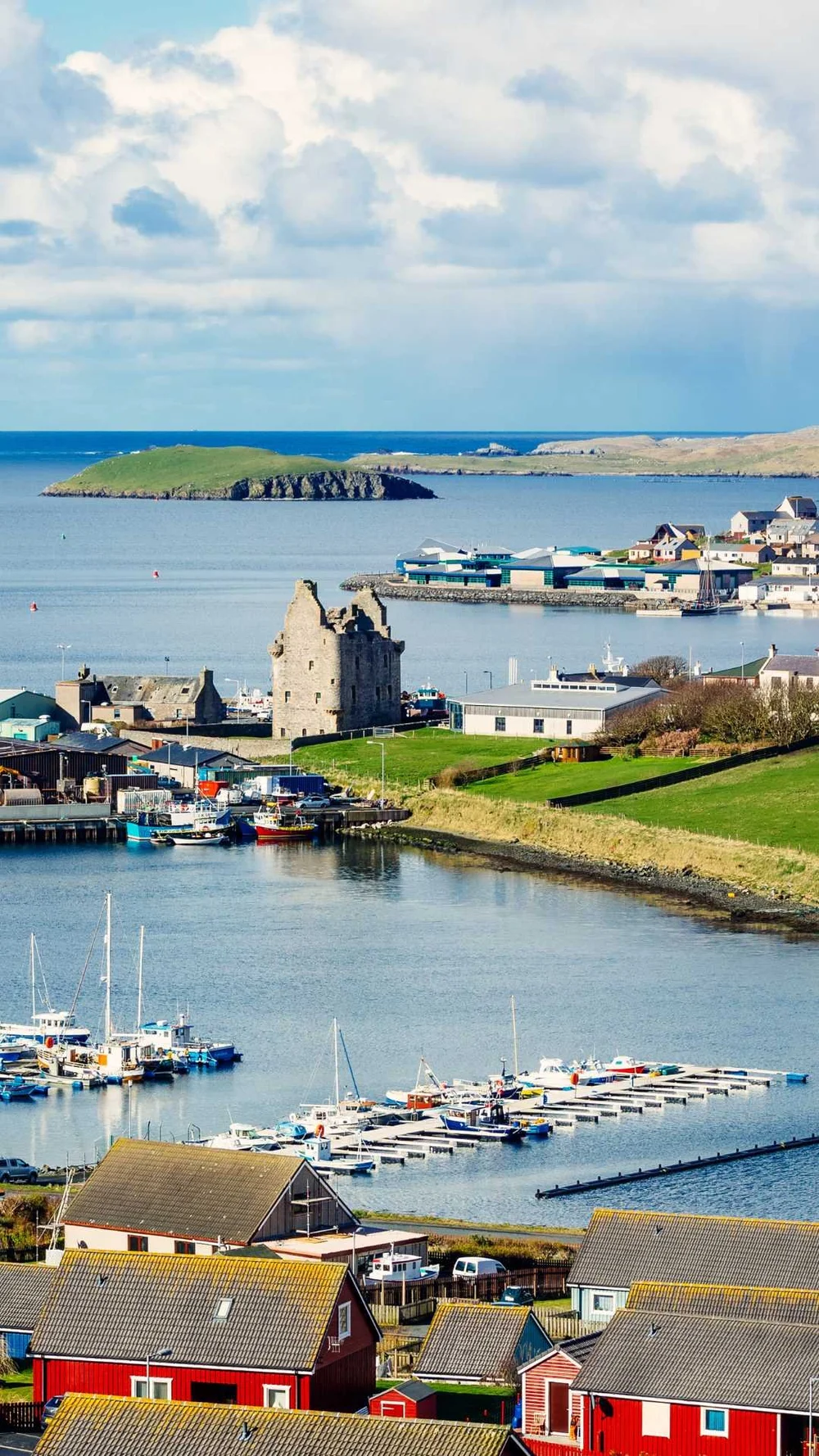
Lerwick has a harbour full of fishing boats, narrow lanes called lodberries, and the excellent Shetland Museum and Archives. Nearby Scalloway, the old capital, has the ruins of Scalloway Castle, built in 1600 by the hated Earl Patrick Stewart.
7Unst, Hermaness and Muckle Flugga
Unst is the most northerly inhabited island in the UK. At its northern tip, the Hermaness nature reserve has huge colonies of gannets, puffins and great skuas, and looks out to Muckle Flugga, Britain’s most northerly lighthouse.
Wildlife in Shetland
- Puffins: at Sumburgh Head, Hermaness, Noss and Fetlar, roughly May to early August.
- Otters: Shetland is one of the best places in Britain to see them. Look along quiet, seaweedy shores early in the morning.
- Seabirds: the cliffs of Noss, off Bressay, hold one of Britain’s biggest gannet colonies.
- Orcas: pods are seen around the islands in most years, most often in early summer.
- Shetland ponies: the small, tough native ponies graze on hills all over the islands.
- Seals: both grey and common seals are easy to spot around the coast.
Love puffins but can’t get to Shetland? Our guide to puffins in Scotland covers easier places to see them, including our puffin boat trip from Edinburgh.
The best time to visit Shetland
May to August is the best time for most visitors. The seabirds are nesting, the days are very long, and ferries and flights run their full timetables. Around midsummer Shetland gets about 19 hours of daylight, and it never gets fully dark. Shetlanders call this the simmer dim.
Winter is short on daylight but has its own rewards: Up Helly Aa in January, and a good chance of the northern lights, known in Shetland as the mirrie dancers, on clear nights between about October and March. Whenever you go, bring waterproofs and warm layers. It can be windy at any time of year.
Shetland or Orkney?
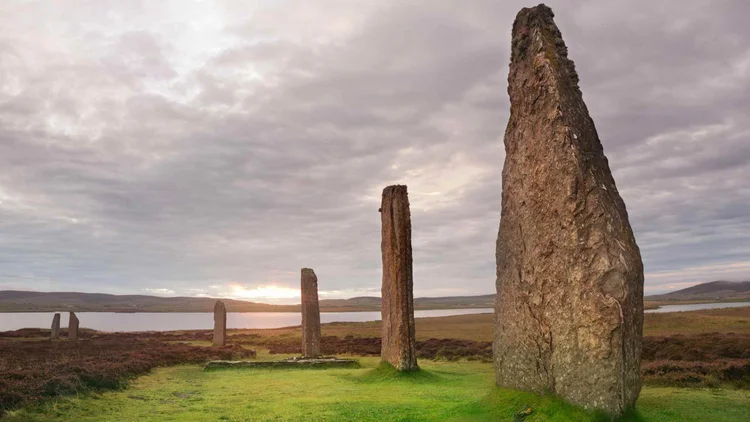
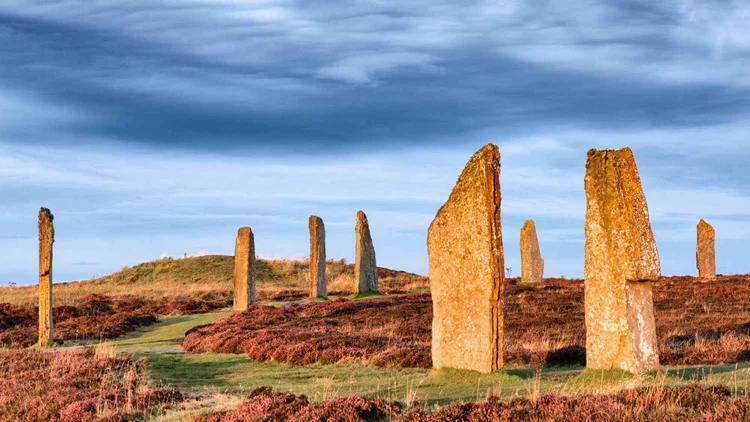
Our guests often ask us which to choose. Orkney is closer, quicker to reach and easier to see in a short trip, and it has some of the most important Neolithic sites in Europe: Skara Brae, the Ring of Brodgar and Maeshowe. Shetland is wilder and more remote, with more Norse character and better wildlife, but it needs more time.
We don’t run scheduled tours to Shetland. Our small-group tours visit Orkney, and if Shetland is on your list, we can plan a private trip that takes in both, travelling on the NorthLink ferry between Kirkwall and Lerwick. Read our Orkney guide to compare.
Visit the northern isles with us
Our Orkney tours travel up through the Highlands and along the North Coast 500, cross the Pentland Firth by ferry and spend time exploring Orkney’s 5,000-year-old sites with a storytelling guide. Groups are small, never more than 16 travellers, and ferries are included.
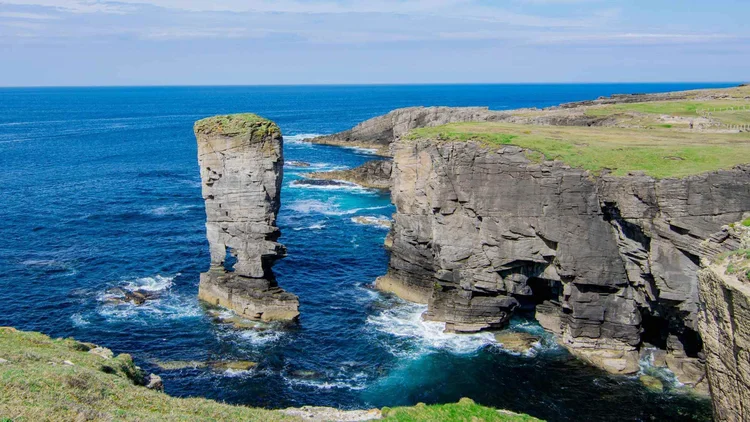 5-Day Orkney Islands Tour from EdinburghSkara Brae, the Ring of Brodgar, Maeshowe, the North Coast 500 and Loch Ness. Ferries included.From £428 pp25% depositView tour →
 5-Day Orkney Tour from GlasgowOrkney, the North Coast 500 and Loch Ness, finishing in Edinburgh. Ferries included.From £428 pp25% depositView tour →
 3-Day Orkney Tour from InvernessThe North Coast 500, the ferry to Orkney, Skara Brae, Maeshowe and the Ring of Brodgar.From £316 pp25% depositView tour →
 A private trip that includes ShetlandYour own guide and itinerary. We can plan Orkney and Shetland together, with the ferries between them.Tailor-madeTell us your dates and ideasPlan your trip →
See all our island trips on the Scottish island tours page.
Shetland Islands FAQs
Where are the Shetland Islands?
In the North Sea, about 110 miles (170 km) north-east of mainland Scotland and 50 miles (80 km) north-east of Orkney. They’re the most northerly part of the UK.
Are the Shetland Islands part of Scotland?
Yes. Shetland has been part of Scotland since 1469–72, when it was pledged by the King of Denmark and Norway and then annexed by Scotland. Before that it had been ruled from Norway for around 600 years.
How do you get to the Shetland Islands?
NorthLink Ferries runs an overnight ferry from Aberdeen to Lerwick every day, taking about 12 hours (14 to 15 hours via Kirkwall). Loganair flies to Sumburgh Airport from several Scottish airports, including Aberdeen, Edinburgh and Glasgow.
How many islands are in Shetland?
There are about 100 islands, and 16 of them are inhabited. The largest is called Mainland.
What is the capital of Shetland?
Lerwick, on Mainland, is Shetland’s main town and its administrative centre.
When is the best time to visit Shetland?
May to August, for long days, nesting seabirds and full ferry and flight timetables. Visit in late January for the Up Helly Aa fire festival, or in winter for a chance of the northern lights.
Can you see puffins in Shetland?
Yes. Sumburgh Head, Hermaness on Unst, Noss and Fetlar all have puffin colonies, and they’re usually there from about May to early August.
Does Scotland’s Wild run tours to Shetland?
Not as scheduled small-group tours. Our group tours visit Orkney, and we can plan a private trip that includes Shetland.
More Scottish islands
Last updated September 2026 by the Scotland's Wild team.